Treatment
LAMINATE
Veneers
Istanbul · Dr. Dt. Şeyma Kılıçarslan
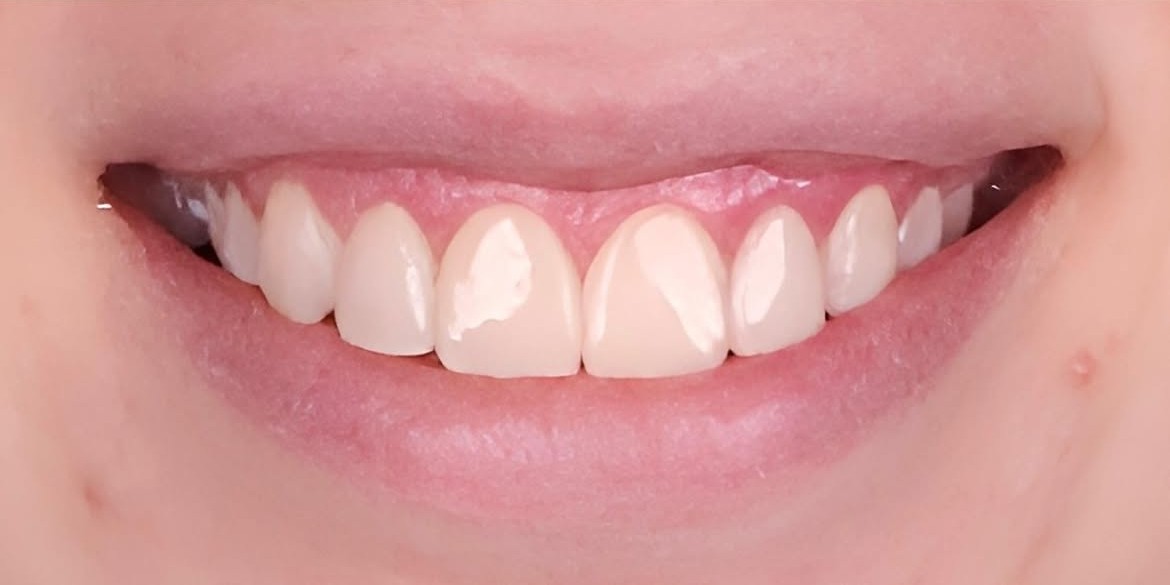
A laminate veneer is a thin shell of porcelain bonded to the visible surface of a tooth. It changes what the tooth looks like — its width, length, edge position, surface texture and colour — without rebuilding the whole tooth the way a crown does.
Because the porcelain is thin, the result depends less on the material than on two other things: whether the case was the right one for veneers in the first place, and how carefully the shape was planned against the face it belongs to.
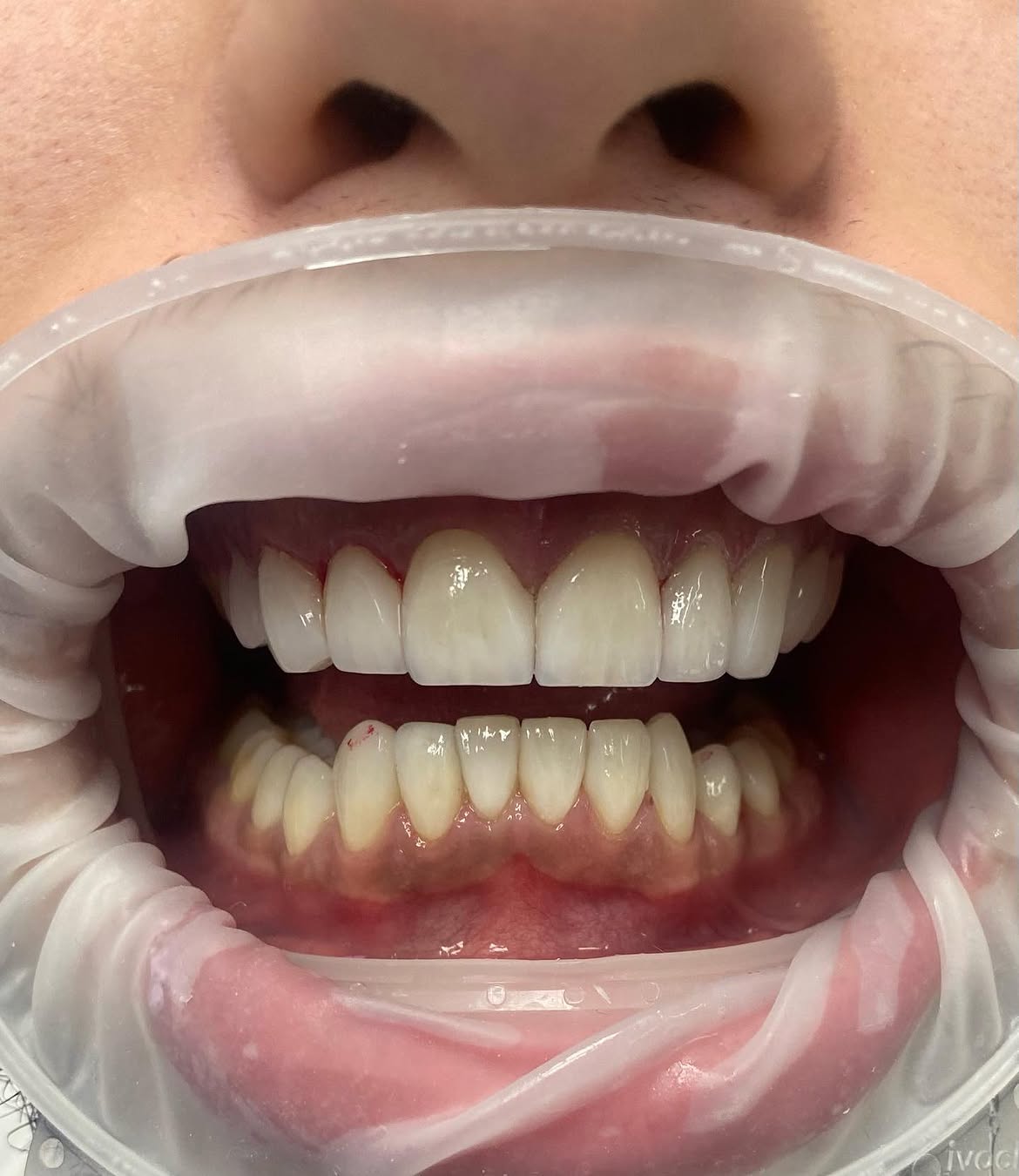
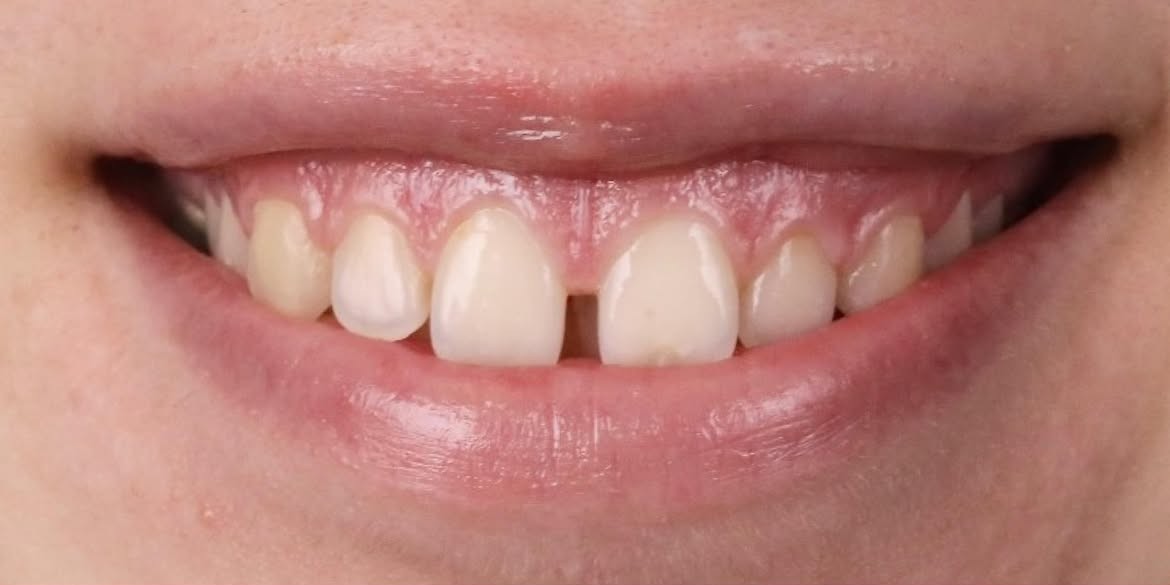
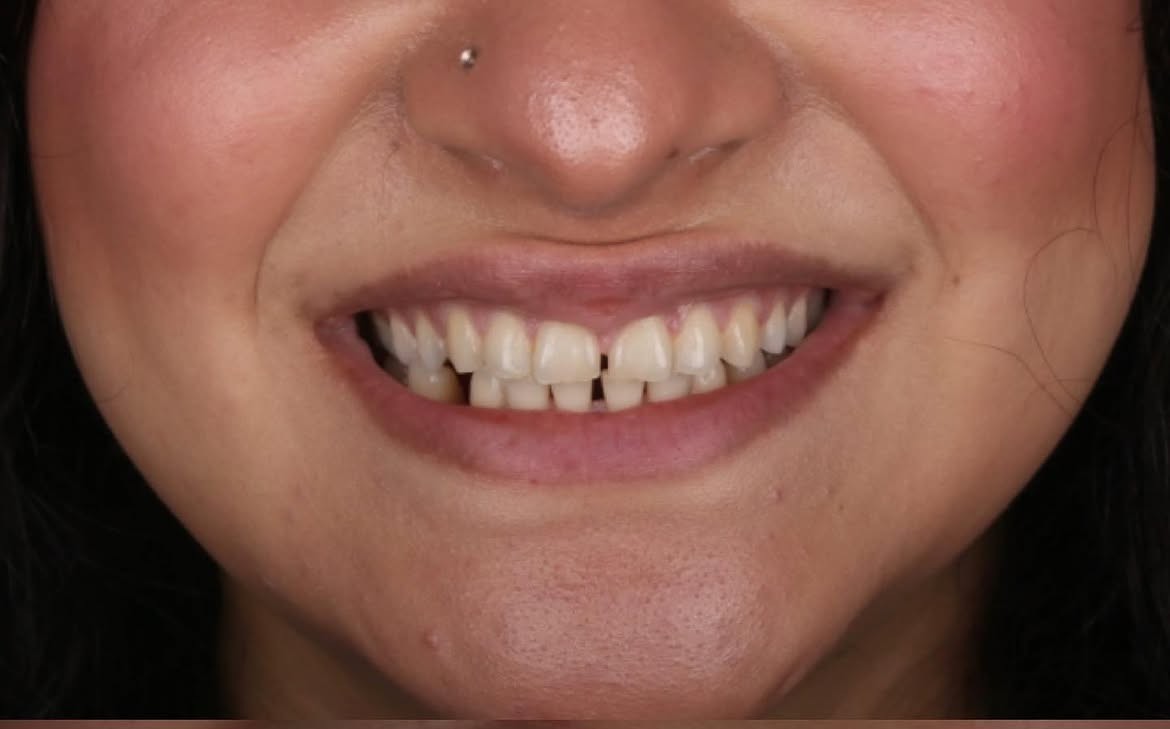
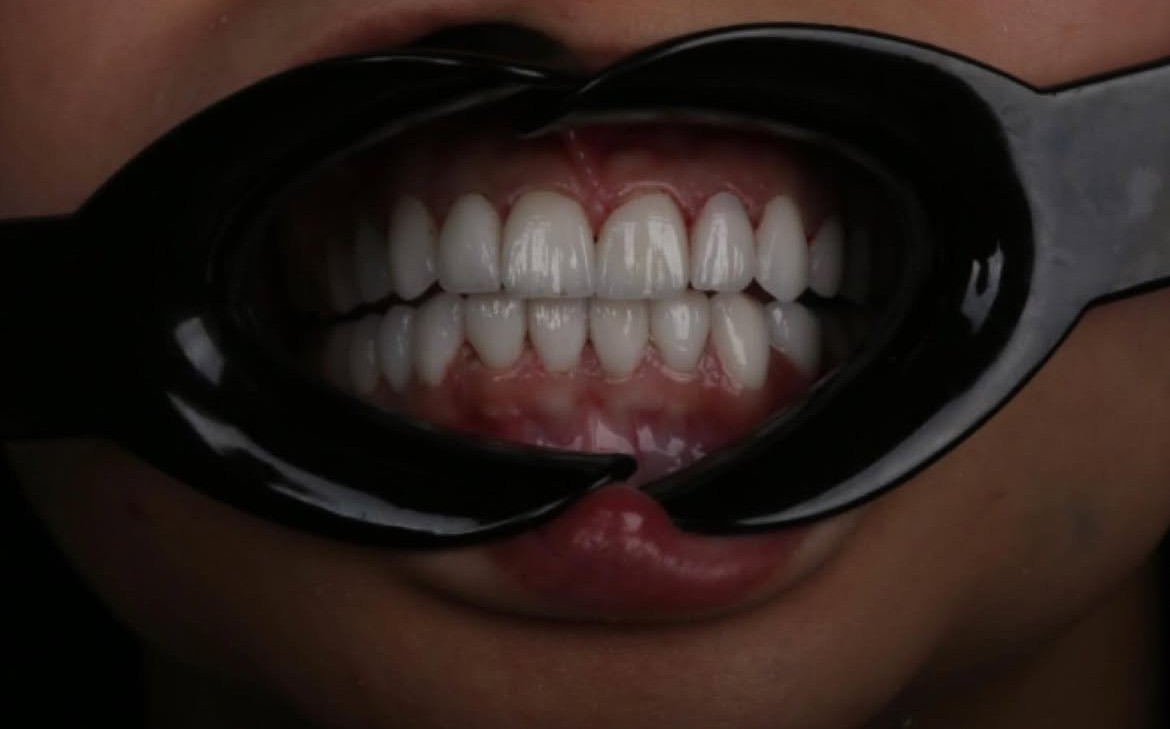
What laminate veneers are
A laminate veneer covers the front of a tooth and, usually, its biting edge. It is made outside the mouth from a single piece of ceramic and then bonded into place with adhesive resin.
The distinction that matters clinically is how much tooth is involved. A veneer resurfaces one face of the tooth. A crown encircles it. That difference determines how much natural tooth has to be removed, and it is the main reason veneers are preferred when the underlying tooth is otherwise sound.
Materials
Most laminate veneers are made from either feldspathic porcelain or lithium disilicate glass-ceramic. Both are glass-based ceramics, which is what allows them to transmit light in a way that resembles enamel.
Feldspathic porcelain is built up in layers by a technician and can be made very thin. It gives the most control over subtle internal colour and surface character, which is why it is often chosen for front teeth where the veneer sits next to natural teeth that have to be matched.
Lithium disilicate is pressed or milled and is stronger, so it tolerates slightly more demanding situations. It is less translucent than thin feldspathic work, and the trade-off between strength and optical behaviour is decided case by case.
Who laminate veneers suit
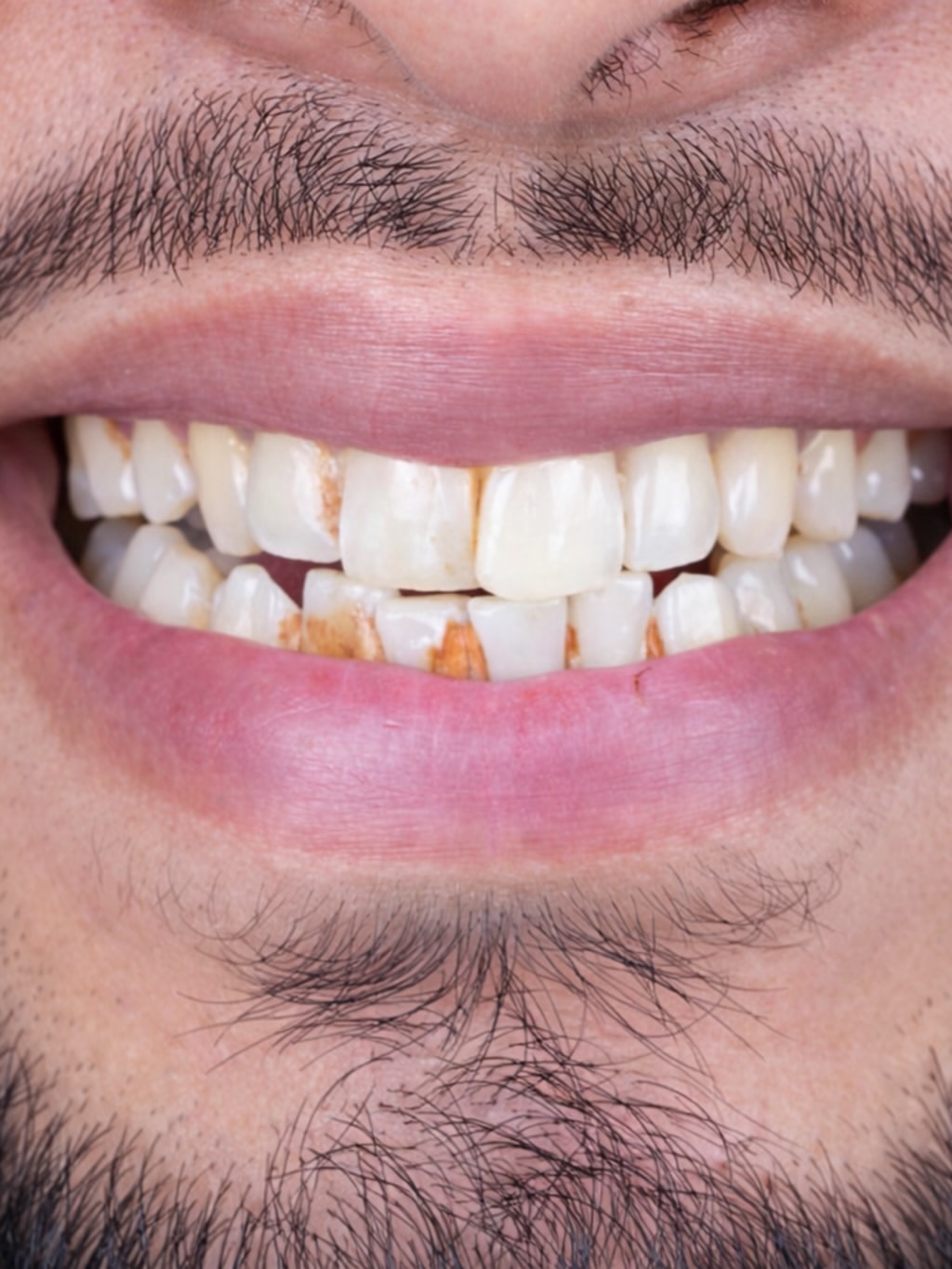
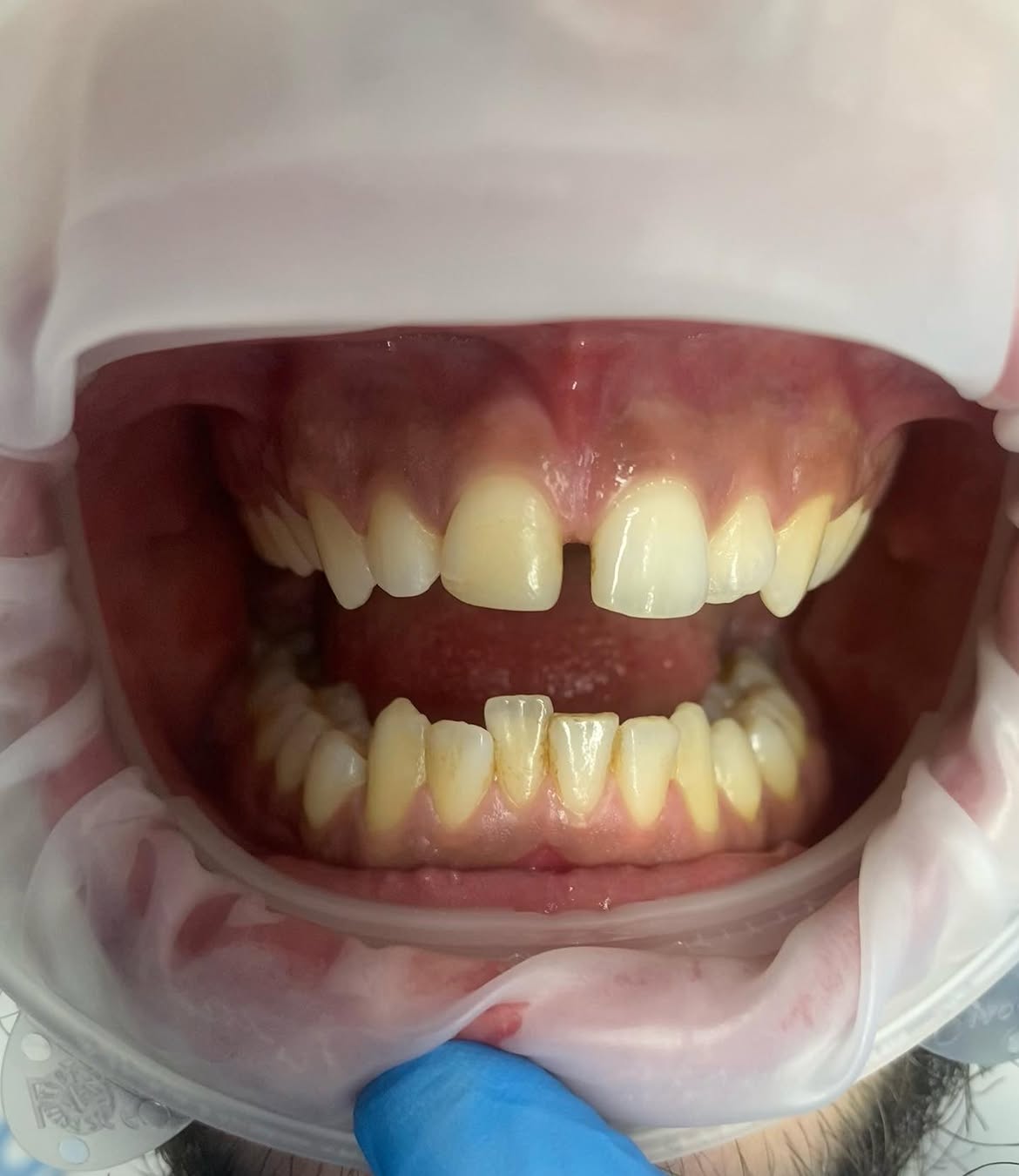
Veneers address the appearance of teeth that are structurally reasonable. They are generally considered where the concern is shape, proportion, spacing, edge wear, or a colour that has not responded to whitening.
Commonly appropriate situations
- Teeth that are sound but narrow, short, or uneven in proportion
- Small gaps between front teeth where orthodontics is not wanted or not indicated
- Discolouration that whitening has not resolved, such as intrinsic staining
- Worn or chipped incisal edges where the remaining tooth is otherwise healthy
- Mild irregularity in alignment that does not require moving the teeth
When veneers are not the right treatment
There are situations where bonding porcelain to the front of a tooth is either unlikely to last or is treating the wrong problem. Recognising these before starting matters more than any part of the technique.
- Active gum disease or untreated decay — these are addressed first
- Insufficient enamel for the adhesive bond, as bonding to dentine is markedly less predictable
- Significant tooth loss where a crown or another restoration is the more appropriate option
- Untreated bruxism, where grinding forces would repeatedly load thin ceramic
- Alignment problems substantial enough that orthodontic treatment is the more conservative route
The consultation
The first appointment establishes whether veneers are appropriate at all. It covers the condition of the teeth and gums, how the teeth meet when biting and moving, and what specifically the patient wants changed.
That last part is worth being precise about. "Straighter" and "whiter" describe very different treatments, and a request that turns out to be about the position of the gum line rather than the teeth leads somewhere else entirely.
Records are taken at this stage — photographs, and impressions or a digital scan — because planning is done on those records rather than in the chair.
Planning the shape
The proposed shape is designed before any tooth is touched. Tooth width and length are set against facial reference points rather than against an ideal ratio applied uniformly, because faces are not symmetrical and a perfectly symmetrical result tends to read as artificial.
The plan is then built in wax or digitally, and can be transferred into the mouth as a temporary mock-up. This allows the shape to be seen and adjusted while it is still reversible — which is the point of doing it in this order.
Tooth preparation
Most laminate veneers require a small amount of enamel to be removed so the porcelain has space to sit without making the tooth look bulky, and so the margin meets the gum cleanly.
The amount is guided by the planned shape rather than decided in advance, which is why the mock-up comes first. In some cases where teeth are already narrow or worn, very little or no preparation is needed. In others — particularly darker teeth requiring more opaque porcelain — more space is necessary.
Temporary veneers
Between preparation and fitting, temporary veneers are usually placed. They protect the prepared teeth and let the planned shape be tested in normal use — speaking, eating, and seeing the teeth in ordinary light rather than under a dental lamp.
Any adjustment to length or shape is easiest to make at this stage, and changes made to the temporaries can be communicated to the laboratory before the porcelain is finished.
Fitting and bonding
The finished veneers are first tried in without adhesive to check fit, contact with adjacent teeth, margins and colour. Adjustments are made at this point.
Bonding itself is a controlled adhesive procedure: the porcelain and the tooth surface are each prepared, the resin cement is placed, and the veneer is seated and light-cured. Isolation and moisture control during this step have a direct bearing on how long the bond lasts.
The bite is then checked in closing and in lateral movement, since a veneer that is high or interferes in excursion is under load it was not designed for.
Texture, translucency and why veneers look artificial
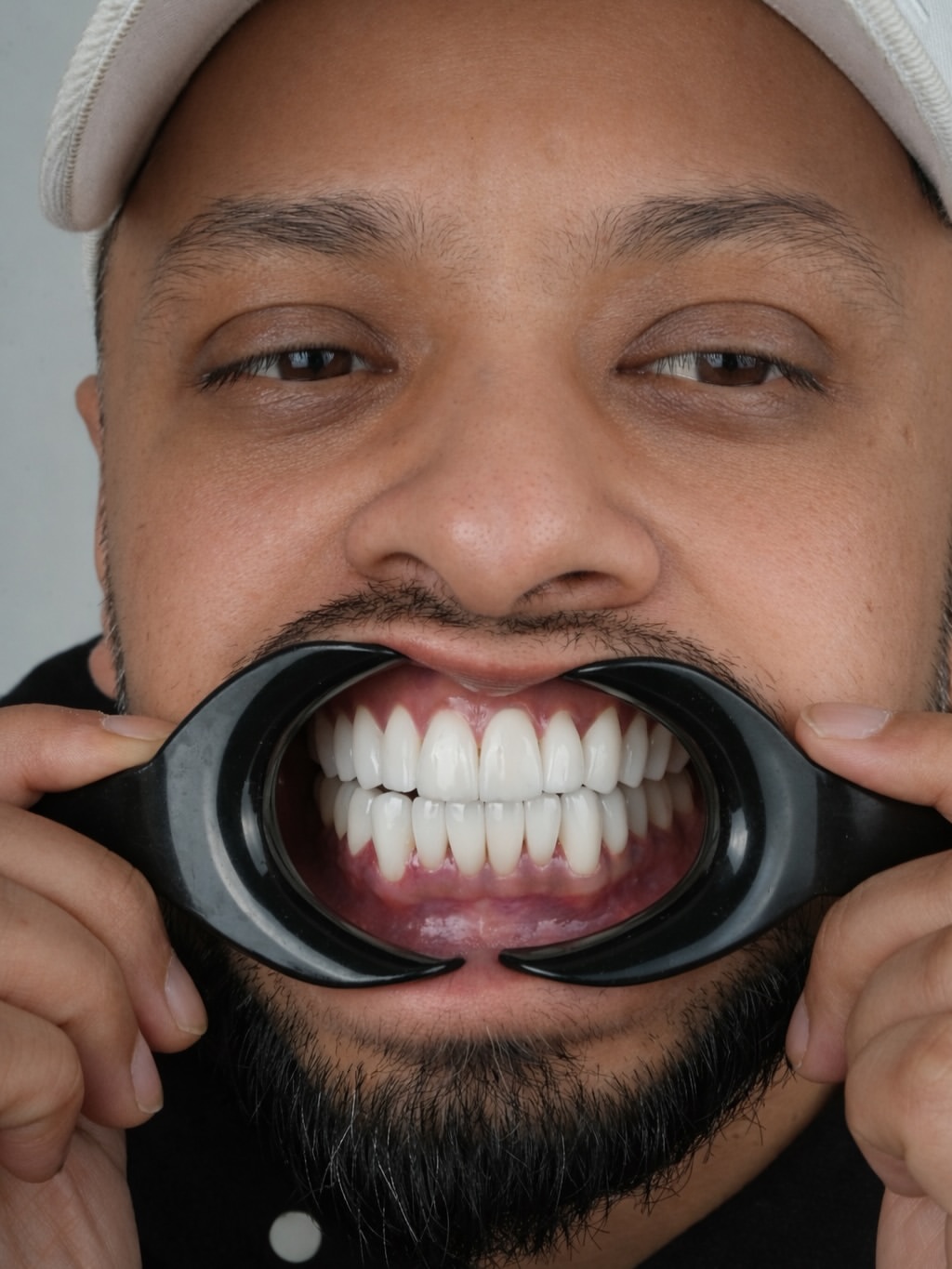
Veneers that look obviously artificial usually share the same characteristics: uniform opacity, identical shapes repeated across every tooth, flat surfaces with no texture, and a shade lighter than anything that occurs naturally.
Natural enamel is not uniform. It is more translucent at the incisal edge than at the gum, it carries fine horizontal surface texture that catches light, and adjacent teeth differ slightly in shape and shade. A central incisor is not a mirror image of its neighbour.
Reproducing that variation is a laboratory skill as much as a clinical one, and it is the main reason two technically sound sets of veneers can look completely different.
Appointments and timeline
A typical course of treatment involves a consultation and records appointment, a preparation appointment with temporaries, and a fitting appointment, with the laboratory work happening in between.
For patients travelling to Istanbul, this is normally arranged as two visits within a single stay, with several days between them for the laboratory stage.
Living with veneers
Veneers are cleaned like natural teeth: brushing twice daily and cleaning between the teeth, with attention to the gum margin where the porcelain meets the tooth.
Porcelain does not stain the way natural enamel does, but the natural tooth and the bonding line can, so the usual advice about coffee, red wine and tobacco still applies.
A night guard is generally recommended for anyone who grinds or clenches. Using teeth to open packaging or bite hard objects is the most common cause of avoidable chipping.
How long they last
Published follow-up studies of bonded porcelain veneers report survival rates that remain high over ten years, though results vary between studies and depend heavily on case selection, the quality of the adhesive bond and patient habits such as grinding.
Veneers are a restoration, not a permanent state. They may need replacing, and the tooth underneath will require a restoration of some kind from that point onward.
Risks and limitations
Every restorative treatment has trade-offs, and these are discussed before treatment rather than after.
- Enamel removal cannot be undone; the tooth will need a restoration from that point on
- Temporary sensitivity to hot and cold after preparation is common and usually settles
- Porcelain can chip or fracture, particularly under grinding forces
- A veneer can debond, most often where bonding was to dentine rather than enamel
- Gum health at the margin depends on cleaning and on how the margin was finished
- Colour cannot be changed after bonding — the shade is decided beforehand
Alternatives worth considering first
Veneers are one option among several, and are not always the least invasive one.
- Professional whitening, where the concern is colour alone
- Orthodontic treatment, where the concern is position — this moves teeth rather than reshaping them
- Composite bonding, which is reversible and cheaper but less stable in colour over time
- Reshaping of the enamel edges, for minor irregularities
- Crowns, where the tooth is too heavily restored or broken down for a veneer
Laminate veneers compared with zirconia
These treatments are often presented as competing choices when they answer different clinical questions.
A laminate veneer resurfaces the front of a structurally sound tooth and removes minimal enamel. A zirconia restoration is a crown: it covers the tooth completely and requires considerably more reduction, but it restores a tooth that has already lost significant structure.
The deciding factor is usually the state of the tooth rather than the appearance being sought. A sound tooth that needs reshaping is a veneer case. A heavily filled, root-treated or fractured tooth is generally not.
Laminate Veneers
questions.
What are laminate veneers?
A laminate veneer is a thin shell of porcelain bonded to the front surface of a tooth. It changes the tooth’s shape, width, length, surface texture and colour without rebuilding the whole tooth the way a crown does. Because only the visible surface is covered, considerably less tooth structure is removed than for a crown.
Who is suitable for laminate veneers?
Veneers are generally considered for teeth that are structurally sound but uneven in shape or proportion, slightly spaced, worn at the edges, or discoloured in a way that has not responded to whitening. They are not appropriate where there is active gum disease or untreated decay, where too little enamel remains for a reliable bond, or where the underlying problem is tooth position and orthodontic treatment would be the more conservative option. Treatment suitability can only be determined following an individual clinical assessment.
Do laminate veneers require tooth preparation?
In most cases a small amount of enamel is removed so the porcelain has room to sit without making the tooth look bulky and so the margin meets the gum cleanly. The amount depends on the planned shape and the starting position of the tooth: where teeth are already narrow or worn, very little may be needed, while darker teeth requiring more opaque porcelain need more space. Enamel removal is not reversible, so the planned shape is usually tested with a temporary mock-up before any preparation begins.
How long do porcelain veneers last?
Published follow-up studies of bonded porcelain veneers report survival rates that remain high over ten years, but results vary between studies and depend heavily on case selection, the quality of the adhesive bond, gum health and habits such as grinding. Veneers are a restoration rather than a permanent state: they may need replacing, and the tooth underneath will require some form of restoration from that point onward. No dentist can guarantee a specific lifespan.
What is the difference between zirconia crowns and laminate veneers?
A laminate veneer covers only the front surface of a tooth and removes a small amount of enamel; a zirconia crown covers the entire tooth and requires reduction on every surface. The choice is usually determined by the condition of the tooth rather than the appearance being sought: a sound tooth that needs reshaping is generally a veneer case, while a heavily filled, root-treated or fractured tooth is generally not. In a full smile design both are often used in the same case.
How many appointments are normally required?
A typical course involves a consultation and records appointment, a preparation appointment at which temporary veneers are placed, and a fitting appointment once the laboratory work is complete. For patients travelling to Istanbul this is usually arranged as two visits within a single stay, with several days in between for the laboratory stage. The exact sequence depends on the case.
Continue reading
Zirconia Restorations
Full-coverage crowns and bridges milled from zirconium dioxide, used to rebuild teeth that have lost too much structure to be restored with a veneer.
Read moreSmile Design
The planning process that comes before any treatment: establishing tooth proportion, edge position and alignment against the face, and testing the result while it is still reversible.
Read moreAbout Şeyma Kılıçarslan
Prosthetic and aesthetic dentistry
Read more
Considering laminate veneers?
Start with an assessment.
Whether this treatment is right for your teeth can only be established by examining them. A consultation will tell you plainly if it is not.
Nişantaşı, Şişli · +90 532 568 92 99