Treatment
SMILE
Design
Istanbul · Dr. Dt. Şeyma Kılıçarslan
Smile design is not a treatment in itself. It is the planning stage that determines what the treatment should be — which teeth are involved, what shape they should take, and whether veneers, crowns, orthodontics or nothing at all is the right answer.
The reason it exists as a distinct step is that the alternative is deciding shape at the chair, after the teeth have already been prepared. By then the useful decisions have been made irreversibly.

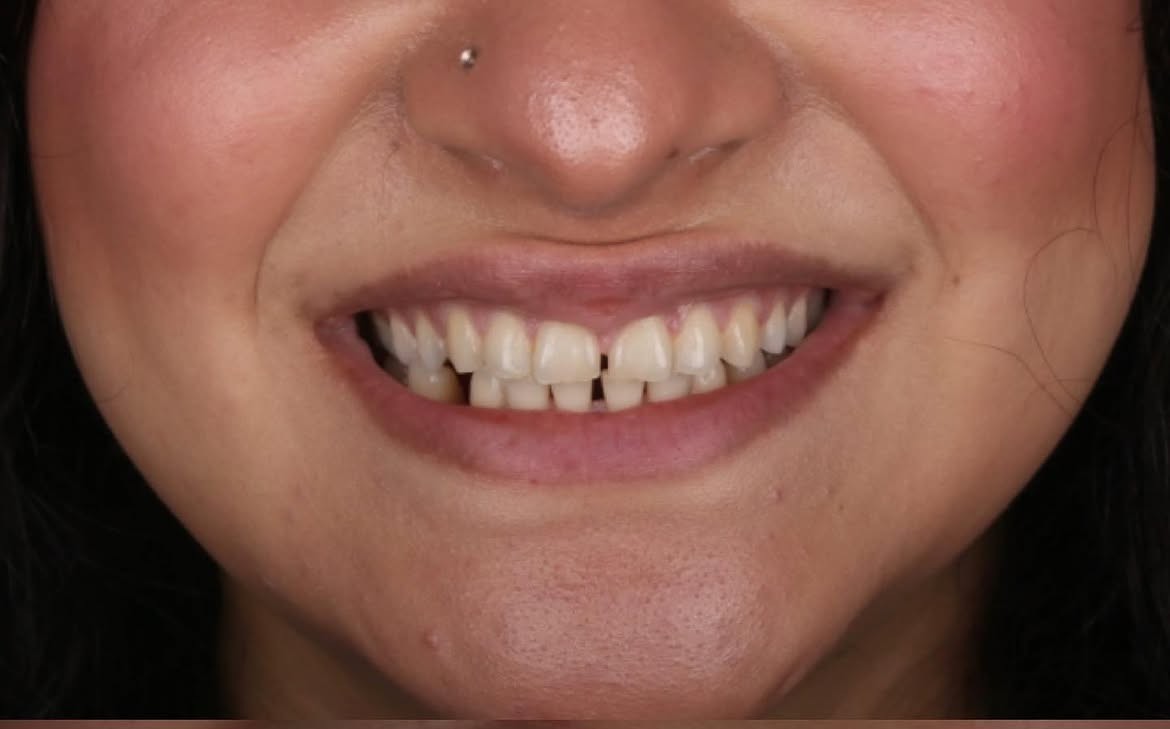
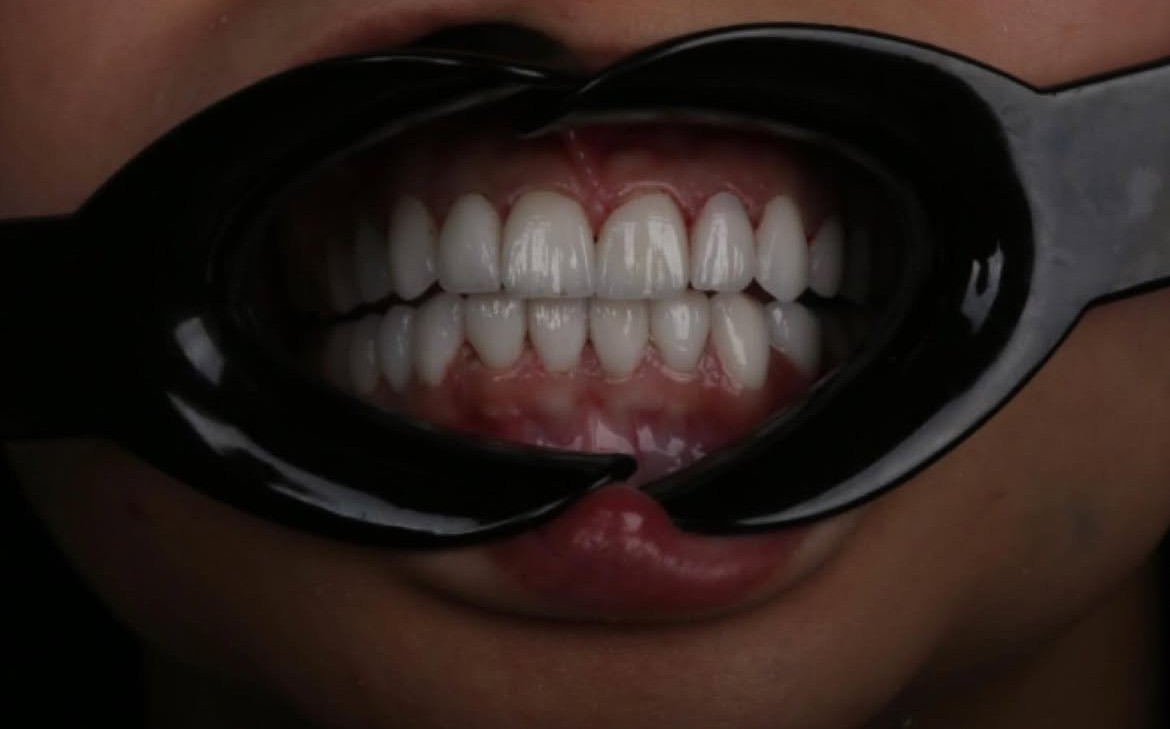
Starting with the face, not the teeth
Teeth are assessed in the context of the face around them. The position of the lip when relaxed and when smiling, how much tooth and gum is visible, the facial midline and the horizontal reference of the eyes all constrain what the teeth should look like.
A set of teeth designed in isolation can be technically correct and still look wrong, because it does not sit properly in the face it belongs to.
Proportion and edge position
Two decisions do most of the work: how long the front teeth are, and where their biting edges sit relative to the lower lip.
From there, the relative widths of the teeth as they recede toward the back of the mouth create the sense of depth. Published proportional guides exist and are useful as a starting reference, but they are a reference rather than a rule — applied rigidly they produce results that look calculated.
Symmetry, and why perfect symmetry looks wrong
Natural faces are not symmetrical, and natural teeth are not identical to one another. A design where each tooth mirrors its counterpart exactly tends to be read as artificial, even by people who cannot say why.
The aim is balance rather than duplication: the midline consistent with the face, the two sides in proportion, but individual character retained in the shape and surface of each tooth.
Digital planning
Photographs, a digital scan and where necessary radiographs are used to build the proposed design against the actual face rather than against a template.
The output is a specific plan: which teeth are treated, what shape each takes, how much preparation each requires, and where the limits are. It also identifies cases where the desired result is not achievable with restorations alone.
Testing it before committing
The planned design can be transferred into the mouth as a temporary mock-up, placed over the unprepared teeth. It can be seen in a mirror, photographed, spoken with and assessed in ordinary light.
This is the point at which changes cost nothing. Length, edge shape and overall proportion can be adjusted, or the plan can be abandoned entirely, with no tooth structure having been removed.
What the resulting treatment may involve
Smile design determines the treatment; it does not presuppose it. Depending on what the assessment finds, a plan may involve any combination of the following — or may conclude that no restorative treatment is warranted.
- Laminate veneers, where teeth are sound and the concern is shape or proportion
- Zirconia crowns, where teeth have lost structure and need rebuilding
- Orthodontic treatment, where the position of the teeth is the actual problem
- Whitening, where colour is the only concern
- Gum contouring, where the amount of gum shown is disproportionate
- Periodontal or restorative treatment first, where the foundation needs addressing
Smile Design
questions.
What is smile design?
Smile design is the planning stage that happens before any treatment. Tooth proportion, length, edge position and alignment are assessed against the face rather than in isolation, and the proposed result is designed on photographs and a digital scan. It determines what treatment is appropriate — which may be veneers, crowns, orthodontics, whitening, or no restorative treatment at all.
Can I see the result before treatment starts?
The planned design can be transferred into the mouth as a temporary mock-up placed over the unprepared teeth, so it can be seen, photographed and spoken with before anything irreversible is done. Length, edge shape and proportion can be adjusted at that point, or the plan reconsidered entirely, with no tooth structure removed. A mock-up shows shape and proportion reliably; final surface texture and translucency are established in the laboratory work that follows.
Can I have an online consultation before travelling?
Yes. An initial online consultation reviews photographs and what you would like changed, and gives an indication of whether the treatment you are considering is likely to be appropriate. It is a preliminary discussion rather than a diagnosis: a definitive treatment plan requires a clinical examination, and in some cases radiographs, which can only be done in person.
Who is suitable for laminate veneers?
Veneers are generally considered for teeth that are structurally sound but uneven in shape or proportion, slightly spaced, worn at the edges, or discoloured in a way that has not responded to whitening. They are not appropriate where there is active gum disease or untreated decay, where too little enamel remains for a reliable bond, or where the underlying problem is tooth position and orthodontic treatment would be the more conservative option. Treatment suitability can only be determined following an individual clinical assessment.
Continue reading
Laminate Veneers
Thin porcelain shells bonded to the front surface of the teeth to alter shape, proportion, alignment and colour, while removing as little tooth structure as the case allows.
Read moreZirconia Restorations
Full-coverage crowns and bridges milled from zirconium dioxide, used to rebuild teeth that have lost too much structure to be restored with a veneer.
Read moreAbout Şeyma Kılıçarslan
Prosthetic and aesthetic dentistry
Read more
Considering smile design?
Start with an assessment.
Whether this treatment is right for your teeth can only be established by examining them. A consultation will tell you plainly if it is not.
Nişantaşı, Şişli · +90 532 568 92 99